
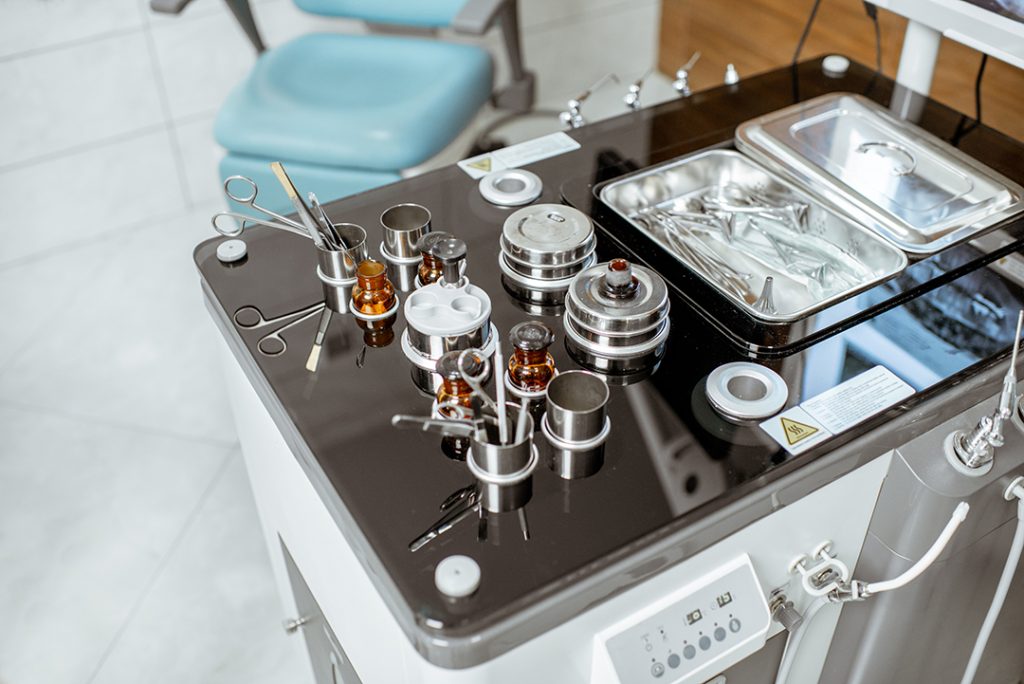
Few industries place higher demands on accuracy and accountability than the medical device sector. Every instrument, implant, and component must be tracked with absolute precision to protect patient safety and comply with stringent regulations. In our experience, traceability in this environment is not optional—it is the very foundation of quality assurance. While digital records play a role, permanent physical identification remains indispensable. That is why custom hand stamps are still widely relied upon to create serial numbers and compliance marks that withstand time, sterilization, and repeated use.
This article builds on concepts introduced in our discussion of serial number marking and expands them with a focus on the medical device industry, where the stakes are higher than almost anywhere else.
The High Stakes of Traceability in Healthcare
When it comes to medical devices, traceability is more than an efficiency tool—it can mean the difference between life and death. Every implantable device, from pacemakers to surgical screws, must carry a unique identifier that ties it back to a documented production record. Without it, recalls become chaotic, audits become impossible, and patient trust evaporates. In our experience, companies that take traceability seriously are not just following regulations; they are protecting lives and reputations.
Regulatory Compliance and the Cost of Failure
The medical device sector is one of the most heavily regulated in the world. Agencies such as the FDA in the United States and the European Medicines Agency (EMA) in Europe require permanent identifiers through frameworks like the Unique Device Identification (UDI) system. These identifiers must survive sterilization, handling, and the rigors of clinical use. Failure to comply results in more than fines—it can result in pulled products, lawsuits, and lasting brand damage. A reliable marking method, such as a custom hand stamp, ensures identifiers remain clear and compliant under all conditions. For a closer look at the specific 21 CFR 801.45 requirements manufacturers need to satisfy, see our detailed guide on steel stamps for medical device UDI compliance.
The Role of Serial Numbers in Patient Safety
Traceability protects patients directly. Imagine a scenario where a specific batch of surgical tools is found to have a defect. Without permanent serial numbers, there is no way to distinguish safe instruments from potentially dangerous ones. Hospitals may be forced to withdraw entire sets of devices, creating shortages and increasing risk. In our experience, stamped serial numbers provide the kind of lasting legibility that gives surgeons and administrators confidence they are using safe, verified equipment.
Hand Stamps vs. Other Marking Methods in Medical Devices
The medical industry uses a variety of part marking techniques, including laser etching and chemical engraving. Each has benefits, but not every facility can justify the cost or complexity of advanced machinery. Labels and inks are immediately disqualified due to sterilization requirements. That’s where hand stamps stand out—they deliver permanent, tamper-proof marks without expensive infrastructure. In our experience, this makes them especially valuable for small to mid-sized medical suppliers, contract manufacturers, or repair shops that need affordable, compliant marking methods.
Custom Metal Stamping for Medical Device Identification
For manufacturers producing larger volumes of medical instruments or components, custom metal stamping offers a scalable solution that combines the permanence of traditional engraving with production-level efficiency. Unlike temporary marking methods that degrade during autoclave cycles, custom metal stamping creates deep, lasting impressions directly into surgical steel, titanium, and other medical-grade materials. This makes it ideal for marking lot numbers, UDI codes, and manufacturer identification on everything from forceps and retractors to orthopedic implant components.
In our experience, custom metal stamping is particularly valuable for contract manufacturers and OEMs who need consistent, repeatable marks across high-volume production runs. The process allows for precise control over character depth and spacing, ensuring that identifiers remain legible even after years of clinical use and hundreds of sterilization cycles. When paired with properly designed steel dies, custom metal stamping delivers the durability and compliance that medical device regulations demand without the ongoing costs associated with laser systems or chemical marking equipment.
Quality Assurance in Manufacturing and Service
In medical manufacturing, quality assurance doesn’t stop at production. Devices are often serviced, sterilized, or reused in clinical environments. Without permanent identifiers, traceability would vanish after the first cleaning cycle. A custom hand stamp ensures that each device carries a unique identifier for its entire service life. In our experience, this supports not only audits and compliance reviews but also everyday hospital inventory management.
Brand Integrity and Trust in Healthcare Markets
Medical professionals rely on trusted brands, and patients trust the devices those brands produce. A clear, permanent mark communicates reliability and professionalism. It reassures hospitals, clinics, and surgical centers that every instrument they use can be traced back to a verified source. In our experience, manufacturers who invest in quality marking solutions—whether through hand stamps, machine stamps, or custom dies—build stronger relationships with their customers and face fewer questions during vendor audits. That kind of trust is difficult to earn and easy to lose, which is why permanent identification remains a cornerstone of brand integrity in the medical device industry.
