
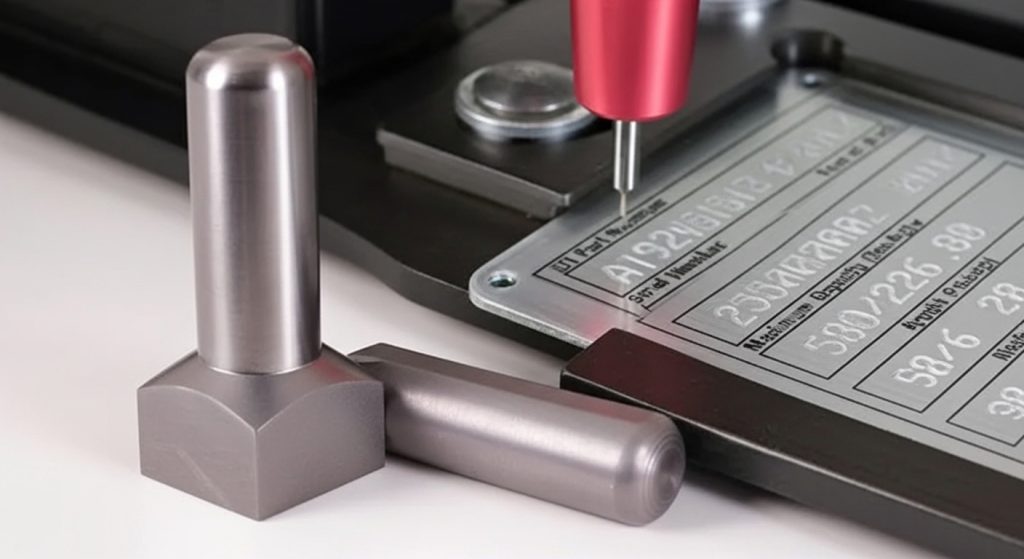
When manufacturers need permanent part identification, they face numerous technology choices. Laser marking, dot peen systems, chemical etching, electrochemical marking, and traditional steel stamps all promise permanent results. With capital equipment ranging from hundreds to hundreds of thousands of dollars, choosing the wrong method means wasted investment and ongoing operational inefficiency.
Many manufacturers default to whatever marking method they’re already familiar with, or whatever their equipment vendor recommends, without rigorously evaluating whether that technology truly fits their requirements. Others chase the latest technology assuming newer must be better, overlooking proven methods that may actually deliver superior results for their specific application.
According to the National Institute of Standards and Technology (NIST), permanent marking and identification systems are fundamental components of modern manufacturing quality systems. Their guidance on manufacturing traceability emphasizes matching marking methods to actual operational requirements rather than selecting technologies based on perception or marketing claims.
At Devore Engraving, we manufacture steel stamps and dies—one of the oldest marking technologies still widely used today. We’re not here to claim steel stamps are always the best choice. Rather, after 60+ years helping manufacturers solve marking challenges, we’ve learned when impact marking with custom steel stamps delivers superior results compared to alternatives, and when other technologies make more sense.
This comprehensive comparison examines major marking technologies to help you make informed decisions based on your specific requirements.
Steel Stamp Marking: The Traditional Standard
Before comparing alternatives, let’s establish what steel stamps offer.
How It Works
Hardened steel tools with engraved designs are struck against parts, displacing material to create permanent impressions. Impact can be manual (with hammers), mechanical (arbor presses), or automated (pneumatic/hydraulic systems).
Key Advantages
- No consumables required (no ink, chemicals, electricity, or gases)
- Marks last the part’s entire lifetime without fading or wearing away
- Works on virtually any metallic material plus wood, leather, and hard plastics
- Simple technology with minimal maintenance requirements
- Very low operating costs after initial stamp investment
- No specialized training required for operators
- Portable—hand stamps work anywhere without power
- Excellent mark contrast and readability
- No hazardous materials or environmental concerns
Limitations
- Requires access to both sides of thin parts (backing needed)
- Creates physical stress in marked material (concern for critical parts)
- Manual marking is labor-intensive at high volumes
- Limited to relatively simple graphics and text
- Difficult on very hard materials (requires powerful equipment)
- Mark depth limited by part thickness
Typical Applications
- Part numbers and serial numbers for traceability
- Logo and brand marking on manufactured products
- Compliance marking for regulated industries
- Field service and repair identification
- Low to medium volume production marking
- Heavy industrial components requiring durable marks
Cost Structure
- Initial investment: $100-$500 for hand stamps, $1,000-$10,000+ for automated systems
- Operating costs: Minimal (hammer replacement, occasional stamp reconditioning)
- Total cost per mark: $0.01-$0.10 depending on volume and system
Laser Marking: High-Tech Precision
Laser marking uses focused light energy to alter material surfaces, creating permanent marks through oxidation, ablation, or color change.
How It Works
Fiber, CO2, or UV lasers direct concentrated energy onto material surfaces. The heat effect creates visible marks without physical contact or material removal (in most cases).
Key Advantages
- Extremely fine detail possible (down to 0.001″ features)
- Complex graphics, logos, and 2D barcodes/DataMatrix codes
- No tool wear—laser doesn’t contact parts
- Automated, computer-controlled for perfect repeatability
- Very fast marking on suitable materials
- No part fixturing required (within focal range)
- Can mark after assembly or coating in many cases
Limitations
- High initial investment ($20,000-$150,000+ depending on power and features)
- Requires electrical power (not portable for field use)
- Doesn’t work well on all materials (reflective surfaces challenging)
- Mark contrast varies by material—some marks difficult to read
- Maintenance requires technical expertise
- Safety concerns (laser hazards require proper enclosures and training)
- Operating costs include electricity and periodic consumables
- Mark durability varies—some laser marks fade or wear faster than stamp marks
Typical Applications
- Medical device marking with UDI codes
- Aerospace components with complex data matrices
- Electronics PCB marking and component identification
- High-volume production requiring complex marks
- Applications where minimal material stress is critical
- Marks on assembled products or coated surfaces
Cost Structure
- Initial investment: $20,000-$150,000+
- Operating costs: $500-$2,000 annually for maintenance, electricity, gases
- Total cost per mark: $0.05-$0.50 depending on mark complexity and equipment utilization
When Laser Marking Beats Steel Stamps
- Need for complex 2D barcodes or extremely fine text
- Very high volumes (thousands per hour)
- Hard or thin materials where impact stress is unacceptable
- After-assembly marking on coated or painted surfaces
- When automation and integration with production systems is critical
When Steel Stamps Beat Laser Marking
- Budget limitations make laser investment impractical
- Portable marking needed (field service, multiple locations)
- Simple marks (part numbers, logos) don’t require laser capabilities
- Maximum mark durability and contrast essential
- Operating in environments without reliable power
- Low to medium volumes don’t justify laser equipment costs
Dot Peen Marking: Automated Impact Marking
Dot peen systems use computer-controlled pins that rapidly strike surfaces, creating marks through thousands of tiny impacts.
How It Works
A hardened pin (stylus) rapidly strikes the surface (100-400 impacts per second) while computer control moves the pin to create characters and graphics from dots.
Key Advantages
- Permanent marks similar to steel stamps
- Computer-controlled for automated operation
- Can mark curved or irregular surfaces
- Programmable content (change marks without tooling changes)
- Reasonably good mark durability on most materials
- Lower investment than laser systems
- Works on wide variety of materials
- Integration with production systems and databases
Limitations
- Moderate initial investment ($5,000-$30,000)
- Slower than laser marking
- Pin wear requires replacement (consumable)
- Mark quality not as crisp as stamps or laser
- Requires electrical power (not portable like hand stamps)
- Mechanical system requires regular maintenance
- Limited mark depth compared to full-force stamps
- Noise during operation may be concern
Typical Applications
- Automotive parts traceability
- VIN marking and component identification
- Manufacturing facilities needing programmable marking
- Medium volume production (hundreds to thousands per day)
- Marks requiring frequent content changes
Cost Structure
- Initial investment: $5,000-$30,000
- Operating costs: $500-$1,500 annually for pins, maintenance, electricity
- Total cost per mark: $0.02-$0.20 depending on mark size and system utilization
When Dot Peen Beats Steel Stamps
- Need to frequently change marked content without tooling changes
- Variable data marking (sequential serial numbers, date codes)
- Medium to high volume automated production
- Integration with MES or ERP systems required
When Steel Stamps Beat Dot Peen
- Marks must withstand extreme wear or harsh environments
- Maximum mark depth and durability required
- Budget limitations or low volumes make automation unjustifiable
- Portable marking needed in field locations
- Simple, consistent marks don’t require programmability
Chemical Etching: Controlled Material Removal
Chemical etching uses acids or etchants to remove material in marked areas, creating permanent impressions.
How It Works
Resist material (stencil, coating, or electro-sensitive film) protects unmarked areas. Chemicals dissolve exposed metal. After etching, resist is removed, leaving permanent marks.
Key Advantages
- Very shallow marks preserve material strength
- Excellent for thin materials where depth is limited
- Uniform mark depth across entire marked area
- Can mark large areas economically
- Good for complex graphics and text
- No impact stress on parts
Limitations
- Chemical handling and disposal concerns
- Environmental regulations may restrict use
- Slower process than impact or laser marking
- Mask/stencil preparation required for each unique mark
- Process control critical for consistent results
- Material removal can affect corrosion resistance
- Safety equipment and training required
Typical Applications
- Medical devices requiring very shallow marks
- Aerospace components where stress concerns prevent impact marking
- Nameplates and identification plates
- Artistic or decorative marking
Cost Structure
- Initial investment: $500-$5,000 for basic equipment
- Operating costs: $1,000-$5,000 annually for chemicals, disposal, safety equipment
- Total cost per mark: $0.50-$5.00 depending on mark size and quantities
When Chemical Etching Beats Steel Stamps
- Ultra-thin materials can’t accept impact marking
- Stress-sensitive applications prohibit material displacement
- Large area marking more economical than large stamps
- Artistic effects not achievable with other methods
When Steel Stamps Beat Chemical Etching
- Environmental or safety concerns about chemical handling
- Need for field marking without facility infrastructure
- Simple marks don’t justify complex chemical processes
- Deep marks required for durability
- Fast turnaround needed (chemical processes are slow)
Electrochemical Marking: Electrolytic Etching
Electrochemical marking uses electrical current to etch marks into conductive materials without harsh chemicals.
How It Works
Electrically charged stencil contacts the part surface. Electrolytic solution carries current, causing controlled material removal in stencil openings.
Key Advantages
- Fast marking (seconds per mark)
- No harsh acids required
- Relatively safe compared to chemical etching
- Portable systems available
- Good mark permanence
- Works on most conductive metals
Limitations
- Only works on electrically conductive materials
- Requires electrical power
- Consumables (stencils, electrolyte solution)
- Moderate initial investment
- Stencil preparation required for each unique mark
- Mark depth limited compared to stamps
- Surface must be clean and conductive
Typical Applications
- Tool and die marking
- Stainless steel component identification
- Manufacturing facilities with mixed marking needs
- Portable marking for maintenance and repair
Cost Structure
- Initial investment: $1,000-$10,000
- Operating costs: $500-$2,000 annually for stencils, solution, electrodes
- Total cost per mark: $0.10-$1.00 depending on mark size and consumable costs
When Electrochemical Marking Beats Steel Stamps
- Marking very hard materials difficult for impact marking
- Need portable powered system
- Stainless steel and other materials where chemical resistance matters
When Steel Stamps Beat Electrochemical
- Non-conductive materials need marking
- No power available in marking locations
- Consumable costs become significant at high volumes
- Maximum mark depth and durability required
Ink Stamping and Pad Printing: Temporary Marking
While not truly permanent, these methods are sometimes used for part identification.
Key Characteristics
- Very low cost and simple operation
- Fast marking
- Works on any surface
- Marks fade, wear away, or can be cleaned off
- Not suitable for permanent identification
- Good for temporary tracking during manufacturing
When to Use
- In-process tracking where permanent marking happens later
- Temporary identification for inspection or assembly
- Supplementing permanent marks with additional temporary information
Why Steel Stamps Are Superior for Permanent Marking
Ink and pad printing cannot provide the permanence required for traceability, compliance, or long-term identification. They serve different purposes than permanent marking methods.
Decision Framework: Choosing the Right Technology
Select marking methods based on systematic evaluation of your requirements:
Question 1: What’s Your Volume?
- Low (under 500/month): Hand stamps or manual methods
- Medium (500-10,000/month): Machine stamps or dot peen
- High (10,000+/month): Automated systems (laser, advanced dot peen)
Question 2: What’s Your Budget?
- Under $5,000: Hand stamps, basic electrochemical
- $5,000-$30,000: Machine stamps, dot peen, basic laser
- $30,000+: Advanced laser, integrated automation
Question 3: How Complex Are Your Marks?
- Simple (text, basic logos): Any method works
- Moderate (detailed logos, graphics): Stamps, laser, dot peen
- Complex (2D barcodes, fine graphics): Laser marking
Question 4: What Materials Are You Marking?
- Soft metals (aluminum, brass): All methods work well
- Hard steels: Stamps (with power), laser, electrochemical
- Stainless steel: Laser, electrochemical, powerful stamps
- Non-metals: Check compatibility for each method
Question 5: Where Is Marking Done?
- Fixed production line: Any automated system
- Multiple locations in facility: Portable dot peen or electrochemical
- Field service locations: Hand stamps (no power required)
Question 6: How Durable Must Marks Be?
- Extreme durability (decades outdoor): Deep steel stamps
- Good durability (years indoor use): Most methods adequate
- Moderate durability: Any permanent method
- Temporary: Ink marking sufficient
Question 7: What’s Your Technical Capability?
- Limited: Hand stamps (simple to use and maintain)
- Moderate: Machine stamps, dot peen
- Advanced: Laser systems, integrated automation
Real-World Comparison Scenarios
Scenario 1: Small Job Shop Making Custom Parts
Requirements: Mark part numbers and customer logos on 50-200 parts monthly, various materials, limited budget.
Best Choice: Custom hand stamps
- Low initial investment fits budget
- Flexibility for diverse parts and materials
- No electrical requirements for field work
- Simple operation requires minimal training
Why Not Laser: Initial investment unjustifiable for volume; overkill for simple marks.
Scenario 2: Automotive Tier 1 Supplier
Requirements: Mark part numbers and date codes on 5,000+ components daily, need traceability integration, hard steel materials.
Best Choice: Laser marking system
- High volume justifies investment
- Programmable for variable data
- Integrates with manufacturing execution system
- Fast enough to keep pace with production
Why Not Stamps: Volume makes manual stamping impractical; automated stamp systems possible but laser offers better flexibility.
Scenario 3: Railroad Component Manufacturer
Requirements: Mark large steel components with identification, harsh outdoor environment, marks must last 30+ years, moderate volumes.
Best Choice: Deep impression machine stamps
- Deep marks survive decades of outdoor exposure
- Works effectively on thick, hard steel
- Lower cost than laser for simple marks
- Proven durability in rail industry
Why Not Laser: Laser marks may not survive decades of extreme conditions; stamp marks provide better longevity assurance.
Scenario 4: Medical Device Manufacturer
Requirements: Mark UDI codes with data matrices on titanium implants, stress-sensitive application, regulatory compliance critical.
Best Choice: Laser marking
- Achieves required 2D barcode complexity
- Minimal stress on stress-sensitive parts
- Meets FDA UDI requirements
- Validated, documented process for compliance
Why Not Stamps: Impact stress unacceptable on medical implants; stamps can’t create 2D data matrices.
Scenario 5: Construction Equipment Service Department
Requirements: Mark repaired components at customer sites, no consistent power available, simple identification marking.
Best Choice: Portable hand stamps
- Works anywhere without power
- Compact, portable toolkit
- Durable marks suitable for equipment
- Low cost for maintenance department budgets
Why Not Other Methods: Power requirements eliminate most alternatives; portability essential for field work.
Combining Multiple Marking Technologies
Many successful operations use different marking methods for different applications:
Primary and Secondary Marking
- Laser for complex traceability codes
- Stamps for simple, extremely durable backup identification
Volume-Based Selection
- Automated systems for high-volume standard products
- Hand stamps for custom work, repairs, prototypes
Application-Specific Choice
- Match technology to specific marking challenges
- Use each method where its advantages matter most
The Future of Marking Technology
Technology continues evolving, but fundamental requirements remain:
Permanence: Marks must last as long as parts
Legibility: Marks must be readable when needed
Cost-Effectiveness: Total cost must be justified by value provided
Reliability: Marking systems must work consistently
Steel stamps have survived 100+ years of technological change because they reliably meet these fundamentals in many applications. Modern manufacturing may incorporate lasers, dot peen, and advanced automation, but custom steel stamps remain relevant wherever their particular advantages—simplicity, durability, low operating cost, and portability—align with requirements.
Conclusion: Match Technology to Requirements
The “best” marking method depends entirely on your specific situation. Laser marking isn’t inherently better than steel stamps—it’s different, with distinct advantages and disadvantages. The key is understanding your requirements and selecting technologies that deliver needed performance at acceptable cost.
At Devore Engraving, we specialize in steel stamp manufacturing because we believe in this proven technology’s value. For many applications—automotive parts, industrial equipment, food processing, and countless others—steel stamps deliver optimal results.
If your marking requirements align with steel stamp capabilities, we’ll help you implement effective, economical solutions. If your needs are better served by alternative technologies, we’ll tell you that honestly. Our goal is helping you achieve reliable part identification and traceability, whatever method serves that goal best.
Ready to explore whether steel stamps fit your marking requirements? Contact our team to discuss your application. We’ll provide honest assessment of whether custom stamps, hand stamps, or alternative technologies best serve your needs. With 60+ years of experience, we’ve seen almost every marking challenge—let us help you select the right solution.
Request a quote today and discover if permanent impact marking with steel stamps is the right choice for your operation.
