
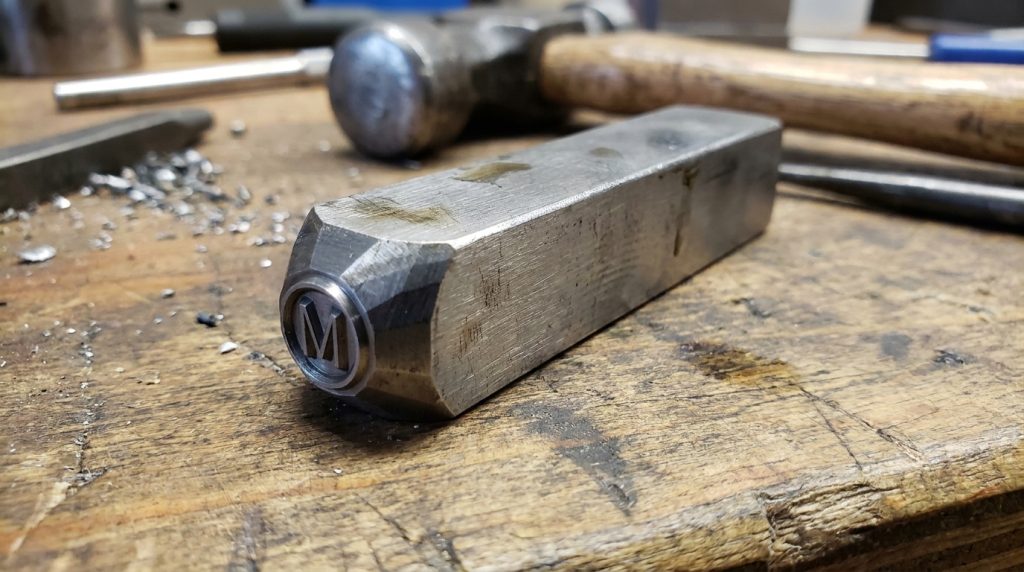
A steel stamp specification sheet is the contract between you and your supplier. Every field on that document defines a characteristic of the tooling you’ll receive — character size, material grade, impression depth, shank dimensions, heat treatment, and mark content. Errors discovered after the stamp arrives mean rework costs, production delays, and in some cases replacement tooling at full cost. Catching errors on the specification before manufacturing begins costs nothing.
Most purchasing problems with custom steel stamps trace back to specification sheets that were incomplete, misread, or approved without verification. This guide walks through every major field on a typical steel stamp specification and explains what each field means, what values are common, and what to verify before approving a quote or order.
Mark Content: What Gets Impressed on the Workpiece
The mark content field specifies exactly what text, numbers, symbols, or graphic elements the stamp will reproduce on the workpiece. This should be specified as a literal representation of the finished impression — exactly the characters in exactly the order they will appear, with line breaks indicated where a multi-line stamp is required.
Common errors in mark content specification include transposed characters in part numbers, incorrect spacing between elements, missing punctuation, and ambiguous characters — the letter O versus the number zero, the letter I versus the number one — that can be interpreted either way without clear specification. Review the mark content field character by character against the drawing or document that defines the required marking. A single transposed digit in a part number produces a non-conforming mark that requires replacement tooling.
Character Size
Character size is typically specified as character height — the vertical dimension of uppercase letters and numerals in the mark. Common sizes for industrial marking range from 1/16 inch to 1/2 inch, with 1/8 inch and 3/16 inch being typical for most general industrial applications.
Verify that the specified character size meets both the minimum legibility requirement for your application and the physical constraints of the marking area on your workpiece. A character size that satisfies the regulatory minimum but is smaller than the available marking area wastes space and reduces legibility margin. A character size that exceeds the available marking area produces a stamp that physically cannot fit on the part. The guide to selecting character size and marking depth covers these trade-offs in detail.
Font Style
Font style specifies the character design that will be engraved into the stamp face. Gothic or block fonts with consistent stroke widths are standard for industrial marking — they stamp cleanly, read clearly, and wear well over thousands of impressions. Script fonts, serif fonts with varying stroke widths, and decorative fonts present manufacturing and performance challenges that should be understood before specifying them.
If your application has a specific font requirement — matching an existing stamp, meeting a customer drawing callout, or reproducing a brand identity — specify it explicitly rather than accepting a supplier default. If no font requirement exists, accepting the supplier’s standard industrial font is usually the right choice. The engineering considerations for font and character design explain why some font choices perform better than others in practice.
Impression Depth
Impression depth specifies how deep the raised character elements on the stamp face project above the stamp face background — which determines the maximum possible depth of the impression in the workpiece. A stamp with .010-inch depth of cut on its characters can produce impressions up to .010 inches deep in the workpiece under optimal conditions.
Common confusion: the depth of cut on the stamp and the impression depth in the workpiece are not the same thing. The stamp depth of cut is the maximum capability. Actual impression depth in the workpiece depends on the force applied, the workpiece hardness, and the character geometry. Verify that the specified stamp depth of cut is adequate for the minimum impression depth required in your workpiece material under your available striking force.
Shank Dimensions
The shank is the section of the stamp that seats into a machine stamp holder or fixture, and its diameter has to match the holder bore or the stamp will not mount. If you are replacing a stamp that fit correctly in existing equipment, specify the replacement with the same shank dimensions as the original rather than accepting a supplier standard that may differ. For what each part of the tool is called and which measurements to take, see our guide to hand stamp dimensions.
Material Grade and Heat Treatment
The material and heat treatment specification defines what the stamp is made from and how it has been processed to achieve the required hardness. This field is among the most technically important on the specification sheet, yet it is frequently left to supplier discretion by buyers who don’t know what to specify.
Standard tool steel grades commonly used for stamps include W1, O1, H13, and D2, each offering different combinations of hardness, toughness, and wear resistance appropriate for different workpiece materials and production volumes. The guide to steel grades for custom stamps explains which grades suit which applications. If your workpiece is unusually hard, unusually abrasive, or used in high-temperature applications, specifying the material grade rather than accepting a default protects you against receiving a stamp that is technically correct but wrong for your application.
Number of Pieces
Quantity affects both price and production planning. For high-volume marking applications, ordering duplicate stamps at the initial order provides backup tooling at the lowest per-unit cost — set-up costs are amortized across the full quantity. For compliance marking applications where a worn or damaged stamp could cause a production stoppage, having a spare on the shelf is worth the additional investment.
The service life of a steel stamp varies significantly by application — a stamp used for low-volume hand marking in a job shop lasts far longer than the same stamp running in a production press at high volume. Understanding your expected usage before ordering helps determine whether a single stamp or duplicate tooling is the better investment.
Special Requirements
The special requirements field covers anything not addressed by the standard specification fields — custom face geometry for curved workpieces, extended shank length for restricted access marking locations, specific surface finish requirements, certification documentation, or custom packaging for production-line use.
This field is where errors most commonly occur by omission. Buyers who have special requirements but don’t know where to specify them sometimes assume that describing them in a phone conversation or email is sufficient — and then receive tooling built to standard dimensions that don’t meet their actual needs. Every special requirement belongs on the written specification.
Reviewing the Proof Before Approval
Reputable stamp manufacturers provide a proof — a drawing or digital representation of the stamp as specified — for customer approval before manufacturing begins. This is the last checkpoint before tooling is cut. Review the proof against both the specification sheet and the original drawing or document that defines the marking requirement. Verify character content, size, layout, and any special features. A proof that matches a specification sheet that contains an error still produces wrong tooling — the proof review must go back to the original source document, not just confirm that the proof matches the specification.
Devore Engraving works with customers through the specification process for every custom stamp order, reviewing requirements before manufacturing begins and providing proofs for approval on complex or critical applications. Request a quote with your mark content, workpiece material, character size requirements, and any special specifications. We will confirm the complete specification before manufacturing begins.
