
In industrial marking and precision engraving, choosing the right stamping tool is critical to achieving clean, repeatable, and durable impressions. Among the most widely used marking tools are hand stamps, machine stamps, and roll dies. While they all serve the same general purpose—transferring a mark to a surface—they differ significantly in design, application, and performance.
Whether you’re marking serial numbers on parts, embossing logos onto sheet metal, or customizing tools for identification, understanding the differences between these options is key to selecting the right tool for your needs. Below, we break down how each type of stamp works, what it’s best suited for, and the advantages and limitations to consider.
Hand Stamps
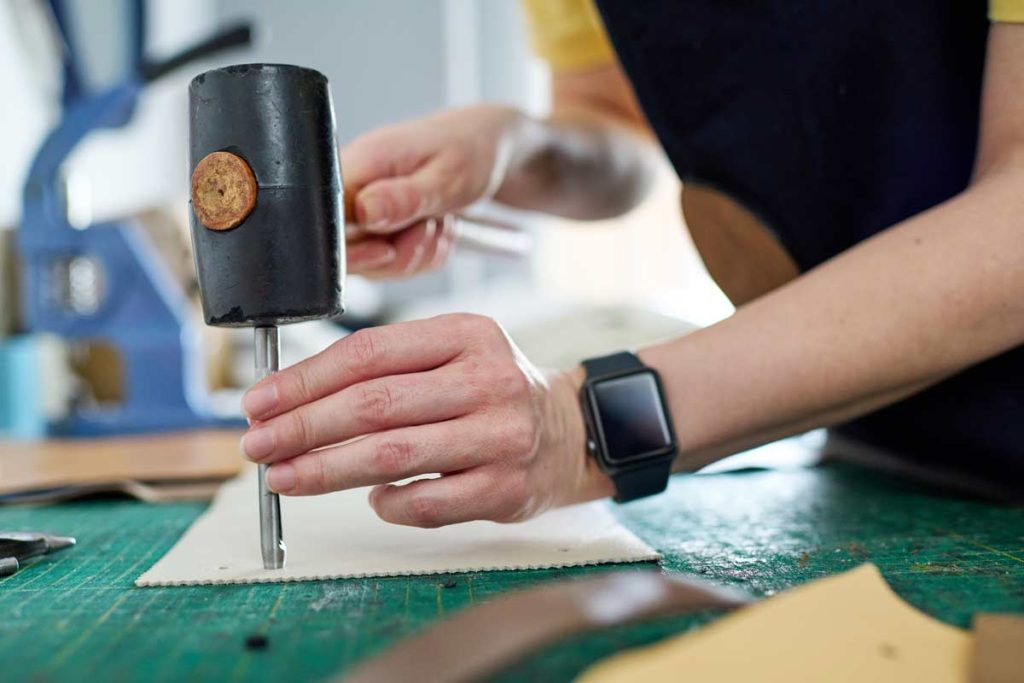
Hand stamps are manually operated tools made from hardened steel, featuring engraved characters or logos at one end. The user holds the stamp against a workpiece and strikes it with a hammer to leave an impression. These tools are simple, portable, and ideal for low-volume marking tasks.
Ideal Use Cases
- Low-production or one-off projects
- Custom engraving on soft metals, leather, or wood
- Portable marking in field environments
- Prototyping or repair shop use
Advantages of Hand Stamps
- Cost-effective and low maintenance
- No electricity or machinery required
- Highly portable and versatile
- Customizable with logos, letters, or numbers
Limitations
- Inconsistent results due to manual pressure
- Slower and more fatiguing for high-volume work
- Can cause surface deformation on thin materials
For companies needing durable, custom-designed hand stamps, Devore Engraving offers precision-made solutions tailored to your material and application.
Machine Stamps
Machine stamps are used in conjunction with industrial marking equipment such as hydraulic presses, impact marking systems, or dot peen machines. These stamps are engineered for automated or semi-automated environments where consistency and volume are key. They are often installed in permanent setups within assembly lines or workstations.
Ideal Use Cases
- Medium to high-volume manufacturing
- Component identification and traceability
- Logos, serial numbers, or part numbers on metal
- Integration into production machinery
Advantages of Machine Stamps
- Highly repeatable and consistent marking
- Can mark harder materials and deeper impressions
- Increased production speed and reduced labor
- Compatible with CNC and robotic systems
Limitations
- Higher upfront investment
- Requires mounting or machinery interface
- Less flexible than hand stamps for mobile use
Devore Engraving manufactures high-performance machine stamps with close tolerances, making them ideal for industries such as aerospace, automotive, and manufacturing.
Roll Dies
Roll dies are specialized tools used to mark cylindrical, curved, or flat surfaces by rolling the die against the material. Typically used in high-speed, continuous production lines, these dies can emboss or deboss logos, patterns, or text onto materials such as steel, aluminum, plastic, and paper.
Ideal Use Cases
- High-volume marking on metal tubing or pipe
- Embossing foil seals or can lids
- Decorative or functional pattern marking
- Food packaging, cable marking, or oil & gas piping
Advantages of Roll Dies
- Continuous marking during material feed
- Low wear over extended production runs
- Smooth operation with minimal downtime
- Customizable with complex logos and designs
Limitations
- Specialized equipment required for installation
- Not suitable for short-run or one-off jobs
- Upfront cost for tooling and setup
Devore Engraving produces custom roll dies for high-speed applications that require durability, detail, and efficiency.
Choosing the Right Tool for the Job
The best stamping tool for your operation depends on a few key factors:
- Volume: Low-volume jobs favor hand stamps, while machine and roll dies are better for high-volume production.
- Material: Softer materials like leather or plastic are well-suited for hand stamping. Hard metals often require machine stamps or roll dies.
- Surface Geometry: Flat surfaces work well with all types; curved or rotating parts are best served by roll dies.
- Precision: For highly consistent results, machine stamps or CNC-integrated dies provide better accuracy.
Still unsure which tool best fits your needs? Contact Devore Engraving for expert guidance and a quote.
Why Marking Matters
Industrial marking plays a vital role in traceability, safety, and quality assurance. From tracking components in aerospace to complying with regulatory standards in medical device manufacturing, clear and permanent markings help maintain accountability and prevent failure.
According to a Wikipedia article on traceability, permanent marking is one of the core strategies industries use to track products throughout their lifecycle, from production through end use.
Custom Solutions from Devore Engraving
Since 1963, Devore Engraving has specialized in crafting custom engraving solutions for American industry. All design, CAD modeling, and machining are done in-house, ensuring tight control over quality and turnaround times.
Whether you need steel stamps, dies, or inserts for industrial use, our expert team is ready to deliver precision tooling that meets your exact specs.
Conclusion
Hand stamps, machine stamps, and roll dies each serve unique roles in industrial marking. Understanding their differences—and where they shine—helps you make the best decision for your process. Hand stamps offer portability and flexibility. Machine stamps ensure repeatability and power. Roll dies enable continuous, high-speed marking on curved or flat surfaces.
For precision, reliability, and durability in your marking tools, trust the experience and craftsmanship of Devore Engraving. Let us help you find the ideal solution for your marking challenge.
