
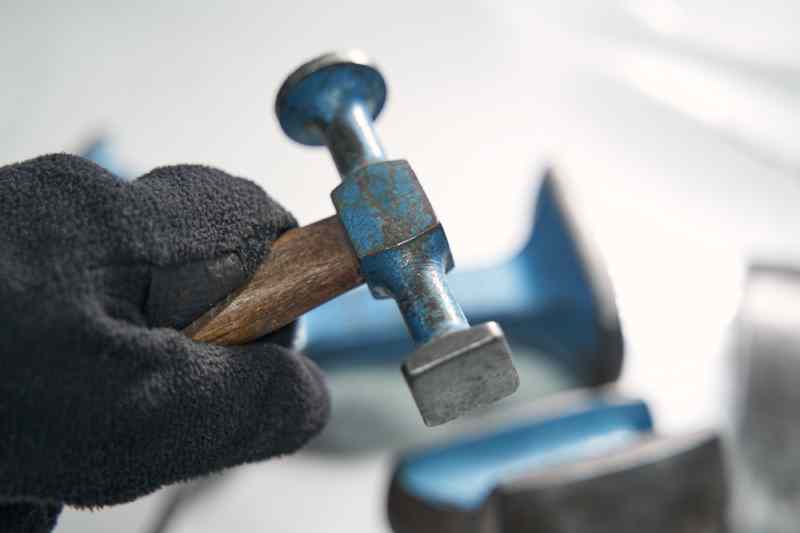
A hand stamp looks like a simple tool: a hardened steel rod with a character on one end and a shank you can grip. On a busy shop floor, though, that simplicity is exactly why it survives next to machines that cost tens of thousands of dollars. No warm-up cycle, no software, no calibration drift. Just steel meeting steel.
That doesn’t mean every shop uses hand stamps the same way, or gets the same life out of them. How a shop selects, stores, and works a hand stamp set into its daily routine determines whether it’s a reliable part of the traceability process or a drawer of mismatched characters nobody trusts anymore.
Why Do Machine Shops Still Reach for a Hand Stamp Over a Machine Stamp or Laser Marker?
Machine stamps and laser markers both outperform a hand stamp on throughput, and for high-volume production runs, that’s usually the right trade. But most shops don’t run one part number all day. They run short jobs, one-off repairs, prototypes, and low-quantity batches where setting up a fixture or programming a laser costs more time than the marking itself.
A hand stamp needs no setup beyond picking the right characters. It works on parts that are already mounted in a vise, already welded into an assembly, or too irregular in shape to feed through a press. According to the National Institute of Standards and Technology, permanent part marking is a recognized element of manufacturing traceability programs regardless of the marking method used, which is why shops keep a hand stamp set on hand even after investing in automated equipment. It’s the tool that covers the jobs the bigger equipment wasn’t built for.
How Does a Hand Stamp Hold Up to Daily Use on a Shop Floor?
A stamp set that gets handled dozens of times a day faces wear the specification sheet doesn’t fully capture. Character faces round off from repeated contact with hardened parts. Shanks develop burrs from being dropped on a concrete floor. Striking faces mushroom slightly under years of hammer blows if the steel wasn’t heat-treated to hold its edge.
- Character face wear shows up first as softened edges on the character, then as reduced legibility on the part.
- Shank damage from drops or impacts can throw off how the stamp seats in a holder or fixture.
- Striking face deformation happens gradually and is easy to miss until impressions start coming out inconsistent.
A stamp that’s mushroomed at the striking end or rounded at the character face isn’t dangerous to keep using, but it stops delivering the sharp, consistent mark a QC inspector expects. Rotating stamps out before they degrade that far costs less than reworking parts that fail a legibility check.
How Should a Shop Organize and Store a Hand Stamp Character Set to Avoid Mix-Ups?
A full alphanumeric character set is a lot of nearly identical steel rods, and a shop that stores them loose in a drawer will eventually grab a 6 for a 9 or mix up similar-looking letters under bad lighting.
| Storage Method | Best For |
|---|---|
| Slotted wood or foam case | Full character sets used at a single workstation |
| Labeled bins by character | Mixed sets shared across multiple stations |
| Magnetic strip or rail | Quick-access subsets (frequently used numbers or letters) |
| Rolling tool cart drawer | Sets that move between job locations on the floor |
Whatever the system, the goal is the same: an operator should be able to find the right character without hunting through unmarked steel. A case with a labeled slot for every character also makes it obvious at a glance when one is missing, which matters more than it sounds like when a missing “S” holds up a job.
When Should a Shop Order a Custom Stamp vs. Buy Standard Character Sets?
Standard alphanumeric sets cover the majority of shop-floor marking needs, and they’re the cheaper, faster option when a job just needs a part number or date code. A custom stamp becomes worth ordering when the mark itself is the point rather than the data.
That includes company logos, inspector initials cut as a single-strike stamp, registered trademarks, or any mark that combines multiple characters into one fixed layout so an operator can’t misassemble it. It’s also worth ordering custom when a standard character size doesn’t fit the part, when curved stock needs a matched radius on the stamp face, or when the same compound mark gets applied often enough that assembling it character by character wastes time on every job. For the technical fields that go into that kind of order, see How to Read a Steel Stamp Specification Sheet: A Buyer’s Guide.
How Does a Hand Stamp Fit Into an Existing Part-Traceability Workflow?
Traceability programs live or die on consistency, and a hand stamp only supports that consistency if it’s used the same way every time. That means the same character set, the same placement location on the part, and the same strike depth from one operator to the next.
Shops that build hand stamping into a documented traceability process typically standardize a few things up front: where on the part the mark goes, which characters represent what (date code format, operator ID, lot number), and how deep the impression needs to be to survive downstream processes like painting or plating. For a closer look at applying that consistency to serial numbers specifically, see Traceability Made Easy: Using Hand Stamps for Serial Numbers. And if a shop is unsure how much force a given material needs for a clean strike, How Hard Should You Strike a Hand Stamp? Force and Hammer Weight by Material covers that by material type.
For shops ready to order a stamp set built for daily floor use, our Custom Hand Stamps page covers material options and lead times, or you can go straight to a quote for your specific job.
