
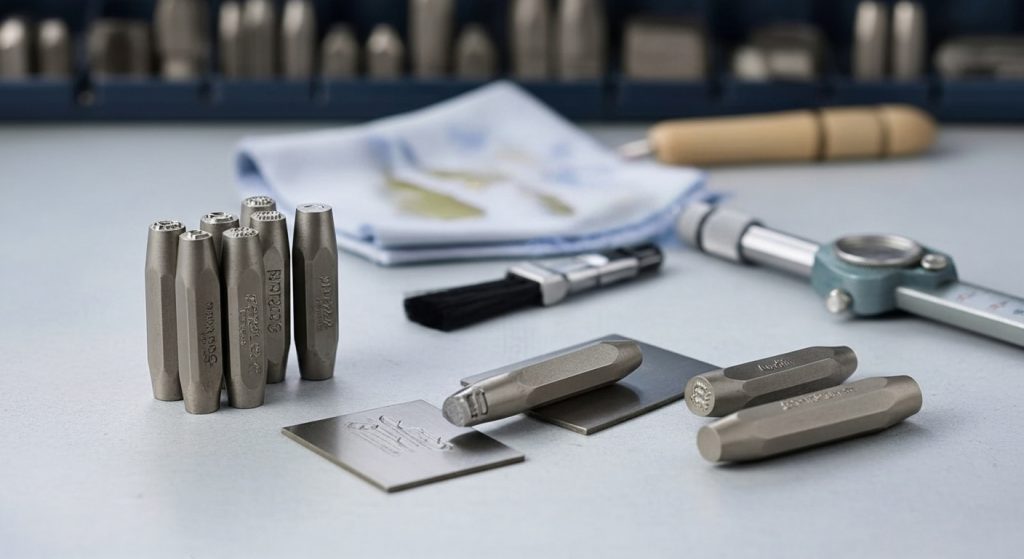
Custom steel stamps represent a significant investment in your production capability. Whether you’ve spent hundreds or thousands of dollars on marking tools, you want them to deliver consistent performance for as long as possible. With proper care and maintenance, quality steel stamps can last decades—but neglect or misuse can destroy them in weeks.
The American Welding Society (AWS) publishes extensive guidance on tool maintenance in manufacturing environments. Their research on metalworking tool longevity demonstrates that preventive maintenance dramatically extends service life while reducing total cost of ownership. These principles apply equally to marking tools.
At Devore Engraving, we’ve manufactured custom stamps since 1963 and have seen firsthand how maintenance practices affect tool longevity. Some customers return stamps after five years that still look nearly new. Others need replacements after just months. The difference isn’t luck—it’s systematic care and proper usage.
This guide provides practical maintenance strategies that maximize steel stamp life expectancy and ensure your marking tools deliver reliable performance throughout their service life.
Understanding What Causes Stamp Degradation
Before discussing maintenance, it’s important to understand what actually damages stamps. This knowledge helps you prioritize the most effective preventive measures.
Physical Wear
Every impression removes microscopic amounts of steel from the stamp face. Over thousands of uses, this cumulative wear rounds sharp edges and reduces character definition. The rate of wear depends on material hardness being marked, impact force used, and stamp material quality.
Impact Damage
Excessive force, off-angle strikes, or impacts against inappropriately hard materials can chip, crack, or deform stamps. While properly designed stamps withstand normal working forces, abuse causes immediate catastrophic damage.
Corrosion
Steel stamps exposed to moisture, chemicals, or corrosive environments develop rust or chemical attack that degrades surfaces and reduces performance. Corrosion is particularly problematic because it’s often invisible until significant damage occurs.
Thermal Damage
Excessive heat (from grinding, welding nearby, or inadequate cooling between strikes) can draw the temper from hardened steel, softening stamps and dramatically accelerating wear. Some marking operations generate significant heat that must be managed.
Contamination
Oil, grease, metal particles, and other contaminants accumulate on stamp faces, reducing mark quality and potentially accelerating wear through abrasive action.
Storage Damage
Improper storage allows stamps to contact each other or hard surfaces, creating nicks and chips. Stamps rolling around in toolboxes suffer damage that shortens their working life.
Daily Maintenance Procedures
Implementing simple daily maintenance dramatically extends stamp life with minimal time investment.
Post-Use Cleaning
After each marking session, clean stamps thoroughly:
- Remove gross contamination – Wipe stamps with clean rags to remove metal particles, oil, and debris
- Detailed cleaning – Use solvent (mineral spirits or denatured alcohol) on a brush to clean character details
- Dry completely – Ensure stamps are completely dry before storage to prevent rust
- Inspect while cleaning – Visual inspection during cleaning catches damage early
For hand stamps used in dirty environments, this cleaning prevents contamination from embedding in stamp faces where it accelerates wear.
Visual Inspection
Examine stamps after each use or at the end of each shift:
- Check character edges – Look for rounding, chips, or cracks
- Examine stamp faces – Identify surface damage, corrosion, or contamination
- Inspect shanks – Check for mushrooming (flaring) from repeated hammer impacts
- Verify straightness – Bent stamps produce angled marks
Document inspections for high-value or critical stamps. Photographic records under magnification provide objective evidence of condition over time.
Protective Coating Application
Before storage, apply thin protective coating:
- Light oil film – Wipe stamps with oiled rag (machine oil or light mineral oil)
- Avoid heavy grease – Thick coatings are hard to remove and attract contamination
- Focus on exposed surfaces – Character faces and shanks need protection
This simple step prevents rust formation during storage, even in moderately humid environments.
Weekly Maintenance Procedures
More thorough maintenance on weekly schedules catches developing problems before they impact production.
Detailed Inspection Under Magnification
Use magnifying glass or jeweler’s loupe (10x minimum) to examine:
- Character definition – Compare to photos of new stamps to assess wear
- Crack detection – Tiny cracks become major failures if undetected
- Wear patterns – Uneven wear indicates problems with technique or equipment
For machine stamps in high-volume production, this inspection should be more frequent—potentially daily depending on usage intensity.
Deep Cleaning
Beyond daily cleaning, periodic deep cleaning removes accumulated residues:
- Ultrasonic cleaning – If available, ultrasonic cleaners remove contamination from character details
- Brush cleaning – Use brass or nylon brushes (never steel wire) to clean fine features
- Solvent soak – Stubborn contamination may require overnight solvent soaking
- Compressed air – Blow out loosened particles from character details
Mushrooming Management
Hand stamp shanks develop mushroomed edges from repeated hammer impacts:
- Grind off mushroomed material – Use bench grinder or file to remove flared metal
- Maintain original diameter – Don’t grind into the shank’s body
- Smooth edges – Remove sharp burrs that could injure operators
- Safety concern – Mushroomed shanks can fracture, sending metal fragments flying
This maintenance is critical for operator safety and stamp longevity.
Lubrication (For Moving Parts)
Some stamps incorporate moving elements (roll dies, adjustable date stamps):
- Apply appropriate lubricants to bearing surfaces
- Remove old lubricant before applying fresh
- Use lubricants compatible with marking environment
- Follow manufacturer recommendations for lubricant type and frequency
Monthly Maintenance Procedures
Monthly comprehensive maintenance ensures stamps remain in optimal condition.
Dimensional Verification
For critical applications, periodically verify stamp dimensions:
- Measure character height and width
- Check mark depth on test specimens
- Compare against original specifications
- Document measurements for trend analysis
Gradual dimensional changes indicate wear progression and help predict when replacement becomes necessary.
Test Impressions and Quality Verification
Make test impressions on standard test pieces:
- Use consistent material, preparation, and marking force
- Compare to reference impressions from new stamps
- Photograph test impressions for records
- Assess whether marks still meet quality requirements
For compliance-critical marking in industries like automotive or medical devices, this verification provides objective evidence that stamps remain within specification.
Storage System Review
Evaluate storage practices:
- Ensure stamps are properly organized and protected
- Verify protective coatings are still effective
- Check for moisture in storage areas
- Confirm labeling remains clear and accurate
Poor storage causes more stamp damage than many realize. Investment in proper storage systems pays dividends through extended tool life.
Proper Storage Practices
How you store stamps between uses profoundly affects their longevity.
Individual Protection
Each stamp should have dedicated protection:
- Plastic sleeves or tubes – Prevent contact with other tools
- Foam-lined cases – Cushion stamps and prevent movement
- Labeled compartments – Organized storage prevents handling damage
- Separate by size – Prevent large heavy stamps from damaging smaller ones
For custom logo stamps or other specialty tools, consider individual fitted cases that completely protect the stamp.
Environmental Control
Storage environment matters:
- Dry locations – Humidity below 50% prevents rust
- Temperature stability – Avoid locations with extreme temperature swings
- Away from chemicals – Corrosive fumes damage steel even without direct contact
- Clean areas – Contamination during storage transfers to parts during use
Accessibility and Organization
Storage should balance protection with accessibility:
- Frequently used stamps should be easily accessible
- Rarely used stamps can be in more secure long-term storage
- Clear labeling prevents wrong stamp selection
- Shadow boards or foam cutout systems show missing stamps immediately
Inventory Management
Maintain records of stamp inventory:
- Track usage frequency for each stamp
- Document maintenance history
- Schedule periodic reviews of stamp condition
- Plan replacement purchases before stamps fail
This proactive approach prevents production interruptions from unexpected stamp failures.
Usage Practices That Extend Life
How stamps are used matters as much as how they’re maintained.
Proper Strike Force
Use minimum force necessary for complete impressions:
- Excessive force doesn’t improve mark quality proportionally
- Overstrike accelerates both stamp and shank wear
- Train operators to find optimal force for each application
- For machine systems, program force limits that prevent abuse
Correct Angle and Alignment
Stamps must strike perpendicular to surfaces:
- Angled strikes concentrate force on stamp edges, causing premature wear or damage
- Use fixtures or guides to maintain proper alignment
- Train operators in proper hand stamp technique
- Verify machine stamp alignment regularly
Appropriate Materials
Use stamps only on materials they’re designed for:
- Don’t mark hardened steel with stamps designed for aluminum
- Consult specifications before marking unfamiliar materials
- When in doubt, test on scrap before marking production parts
- Different industries have different material requirements
Surface Preparation
Prepare surfaces before marking:
- Remove scale, rust, heavy oxidation, or coatings
- Clean oil and grease from marking areas
- For food processing applications, ensure surfaces are dry
- Better surface preparation means less stamp wear
Operator Training
Well-trained operators cause less stamp damage:
- Teach proper striking technique
- Explain why maintenance matters
- Train on inspection procedures
- Emphasize consequences of misuse
Investment in training reduces stamp replacement costs significantly.
When to Recondition vs. Replace
Eventually, stamps wear to the point where maintenance alone isn’t sufficient. Deciding between reconditioning and replacement requires evaluation.
Signs Stamps Need Attention
Watch for these indicators:
- Mark quality declining despite cleaning and maintenance
- Characters becoming rounded or indistinct
- Increased force required for acceptable impressions
- Cracks, chips, or other visible damage
- Dimensional measurements outside tolerances
Reconditioning Options
Some stamps can be reconditioned:
- Re-facing – Grinding worn faces flat and re-engraving
- Re-hardening – Heat treating stamps that have lost hardness
- Polishing – Improving surface finish on worn stamps
- Repair – Welding and re-machining damaged areas (limited applications)
Reconditioning costs less than replacement but isn’t always feasible. Complex designs, severe wear, or critical dimensional requirements may make replacement the better choice.
When Replacement Is Necessary
Replace stamps that:
- Have suffered catastrophic damage (major cracks, broken sections)
- Are worn beyond practical reconditioning depth
- No longer meet dimensional specifications
- Have been contaminated by hazardous materials
- Are obsolete due to design changes
At Devore Engraving, we evaluate customer stamps and recommend reconditioning when feasible or new manufacture when necessary.
Special Considerations for Different Stamp Types
Different stamp types require slightly different maintenance approaches.
Hand Stamps
Custom hand stamps face unique challenges:
- Shank mushrooming from manual striking
- Variable impact force and angle
- Exposure to diverse environments during portable use
- Frequent handling increases contamination and damage risk
Focus on regular shank maintenance and protective storage for portable stamps.
Machine Stamps
Machine stamps integrated into equipment need:
- Regular verification of mounting security
- Cooling system maintenance (if applicable)
- Alignment checks as machines wear
- Coordination with overall equipment maintenance schedules
Roll Dies
Roll dies for cylindrical parts require:
- Bearing lubrication and maintenance
- Alignment verification to prevent uneven wear
- Surface cleaning after marking dirty or contaminated materials
- Protection of curved surfaces during storage
Embossing Dies
Embossing dies need:
- Careful handling to prevent damage to raised features
- Regular cleaning to prevent contamination buildup
- Verification of male/female die alignment
- Lubrication of die sets (following manufacturer recommendations)
Record Keeping and Documentation
Systematic records improve maintenance effectiveness and provide valuable data.
Maintenance Logs
Document all maintenance activities:
- Date and type of maintenance performed
- Condition observations and measurements
- Problems identified and corrective actions taken
- Operator or technician performing maintenance
Usage Tracking
Record stamp usage:
- Number of impressions or production shifts used
- Materials marked and conditions encountered
- Any problems or quality issues observed
- Correlation with maintenance needs
Cost Analysis
Track stamp-related costs:
- Initial purchase price
- Maintenance time and materials
- Reconditioning costs
- Replacement frequency
- Total cost of ownership calculations
This data helps justify maintenance programs and identifies opportunities for improvement.
Troubleshooting Guide: When Maintenance Isn’t Enough
Sometimes problems persist despite good maintenance. Common issues and solutions:
Problem: Marks Degrading Despite Clean Stamps
- Possible cause: Material hardness increased
- Solution: Verify incoming material specifications
- Alternative: Upgrade to harder stamp material
Problem: Rapid Wear on New Stamps
- Possible cause: Improper heat treatment or material selection
- Solution: Contact manufacturer for evaluation
- Prevention: Source stamps from experienced manufacturers like Devore Engraving
Problem: Inconsistent Marks Across Production
- Possible cause: Equipment wear or operator technique
- Solution: Equipment maintenance and operator retraining
- See our troubleshooting guide for detailed diagnostics
Working with Devore Engraving for Optimal Stamp Life
We support customers throughout stamp service life:
Initial Consultation
Proper design and material selection from the start maximizes life expectancy. Our engineering team considers your application requirements, production volumes, and environmental conditions.
Quality Manufacturing
Superior materials, precise machining, and proper heat treatment produce stamps that withstand demanding applications. Our quality standards ensure stamps arrive ready for years of service.
Technical Support
Questions about maintenance, usage, or troubleshooting? Our experienced team provides guidance based on decades of solving real-world marking challenges.
Evaluation Services
Send worn or damaged stamps for evaluation. We’ll assess condition, recommend reconditioning if feasible, or provide quotes for replacement.
Training Resources
We can provide operator training materials or conduct training sessions covering proper use and maintenance of your specific stamps.
Return on Investment: Maintenance Pays
Consider the economics of proper maintenance:
Cost of Neglect
- Premature stamp replacement (stamps failing in months instead of years)
- Production downtime during unplanned replacements
- Quality issues from degraded marks
- Potential compliance problems from unclear identification
Value of Maintenance
- 2-5x extended service life through proper care
- Predictable replacement schedules prevent surprises
- Consistent mark quality throughout stamp life
- Lower total cost of ownership
For high-volume operations marking with machine stamps, the difference between good and poor maintenance can mean tens of thousands of dollars over the tool’s life.
Conclusion: Maintenance Is Investment, Not Expense
Custom steel stamps, properly maintained, deliver decades of reliable service. The maintenance time investment is minimal—minutes per day, hours per month—but the return is substantial. Quality stamps last longer, produce better marks, and support reliable traceability systems throughout their service life.
Whether you’re marking part numbers on automotive components, serial numbers for regulatory compliance, or brand identification on manufactured products, well-maintained stamps ensure consistent, professional results.
At Devore Engraving, we’re committed to manufacturing stamps that reward proper maintenance with exceptional longevity. Our 60+ years of experience goes into every stamp we produce, and we stand ready to support you with guidance, training, and service throughout your stamps’ working life.
Ready to implement a comprehensive maintenance program for your marking tools? Contact us to discuss your specific requirements. We’ll help you develop procedures that maximize stamp life while maintaining the quality and compliance your operations demand.
