
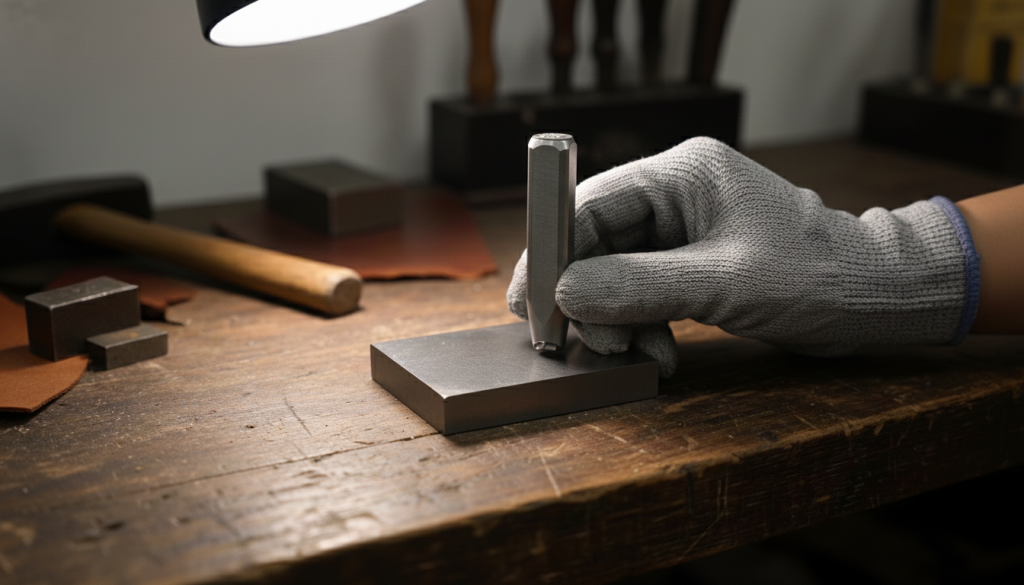
Even with properly designed steel stamps, marking problems occasionally occur in production. Incomplete impressions, distorted characters, inconsistent depth, or premature stamp wear can disrupt operations and compromise traceability. The frustration is compounded when the root cause isn’t obvious.
The good news is that most marking problems follow predictable patterns with identifiable causes. According to the Fabricators & Manufacturers Association International (FMA), equipment and process issues account for the majority of marking defects in metalworking operations. Their research on manufacturing quality control indicates that systematic troubleshooting significantly reduces defect rates and improves production efficiency.
At Devore Engraving, we field troubleshooting calls regularly from customers experiencing marking challenges. After 60+ years in the business, we’ve diagnosed just about every marking problem imaginable. This guide presents the most common issues, their causes, and proven solutions to get your marking operation back on track.
Problem 1: Incomplete or Weak Impressions
Symptoms
Characters appear faint, partially formed, or barely visible. Some areas of the mark transfer completely while others don’t register at all.
Common Causes
Insufficient Impact Force
The most frequent cause of weak impressions is simply not hitting hard enough. With hand stamps, operators may be fatigued or hesitant to strike with adequate force. With machine systems, pneumatic pressure may be set too low or hydraulic pressure insufficient.
Solution: Increase strike force gradually until impressions are complete and consistent. For hand stamping, ensure operators understand proper technique and have appropriate hammers (2-3 lb ball peen hammers for most applications). For machine systems, increase air pressure or hydraulic force in small increments while monitoring mark quality.
Material Harder Than Expected
If your stamps worked fine previously but suddenly produce weak marks, the incoming material may be harder than specified. Steel suppliers occasionally ship material with higher carbon content or that has been inadvertently hardened.
Solution: Test material hardness with a Rockwell tester. If material exceeds specifications, contact your supplier. If harder material is unavoidable, increase impact force or consider stamps made from harder tool steel grades to better withstand the increased force required.
Stamp Wear
Over time, stamp faces wear, becoming rounded rather than sharp. Worn stamps require more force to create the same mark depth.
Solution: Inspect stamp faces under magnification. If edges are rounded or faces show significant wear, the stamp needs reconditioning or replacement. Steel stamp life expectancy varies by application, but routine inspection helps catch wear before mark quality suffers significantly.
Contaminated Striking Surface
Oil, grease, scale, or rust on the part surface prevents the stamp from contacting the metal directly, reducing mark clarity.
Solution: Clean surfaces before marking. For production environments, establish surface preparation procedures. Even a quick wipe with solvent removes most contaminants. For heavily scaled material, wire brushing or light grinding may be necessary.
Improper Stamp Angle
Stamps must strike perpendicular to the surface. Angled strikes produce partial impressions with some characters deep and others barely visible.
Solution: Train operators to hold stamps perfectly vertical. For machine marking, verify fixture alignment and stamp holder perpendicularity. Fixtures for curved or complex surfaces may need custom design to maintain proper angles.
Problem 2: Distorted or Blurred Characters
Symptoms
Characters appear smeared, doubled, or with unclear edges. The mark may show ghost images or streaking.
Common Causes
Stamp Movement During Impact
If the stamp shifts even slightly during striking, characters blur or double. This commonly occurs when hand stamping without proper part support or when machine fixtures allow movement.
Solution: Ensure parts are rigidly supported during marking. For hand stamping, work on solid surfaces (steel plates, anvils, heavy benches). For machine marking, improve fixturing to eliminate part movement. Consider clamping systems or vacuum hold-downs for thin or flexible parts.
Multiple Strikes
Attempting to deepen a mark by striking twice often causes doubling as the stamp position shifts slightly between strikes.
Solution: Use sufficient force to create complete marks with single strikes. If material requires multiple strikes, use precise fixturing that returns the stamp to exactly the same position. For high-production applications, this argues for machine stamps with controlled, repeatable positioning.
Surface Scale or Contamination
Millscale, rust, or heavy oxidation can cause stamps to slide or bounce during impact.
Solution: Remove surface contamination before marking. Shot blasting, sandblasting, or mechanical cleaning prepares surfaces for consistent marking. For automotive or precision applications, this surface preparation should be a standard process step.
Worn or Damaged Stamps
Chips, cracks, or uneven wear on stamp faces produce distorted impressions. Damage often results from excessive force, marking inappropriately hard materials, or off-angle strikes.
Solution: Inspect stamps regularly under magnification. Replace damaged stamps immediately—continued use worsens the damage and may cause catastrophic failure. Store stamps properly to prevent accidental damage during handling.
Problem 3: Inconsistent Mark Depth
Symptoms
Some marks are deeper than others even though the same process is used. Mark depth varies across a production run or even within individual marks.
Common Causes
Operator Technique Variation
With manual marking, different operators (or the same operator at different times) may use varying strike forces. Fatigue, distraction, or inconsistent technique all affect results.
Solution: Standardize marking procedures with written work instructions. Provide operator training emphasizing consistent technique. Consider templates or guides that ensure proper stamp placement and angle. For critical applications, implement quality checks sampling marked parts throughout production runs.
Material Hardness Variation
Even within the same material specification, hardness can vary from heat to heat or location to location within large parts. These variations affect mark depth for given impact force.
Solution: If consistency is critical, consider incoming material inspection and hardness testing. For parts with hardness gradients (like surface-hardened components), mark in consistent locations where hardness is uniform. Document acceptable mark depth ranges rather than single target values.
Equipment Wear or Maintenance Issues
Pneumatic systems lose pressure over time as seals wear. Springs in mechanical presses weaken. Hydraulic fluid viscosity changes with temperature. All these factors affect delivered impact force.
Solution: Implement preventive maintenance schedules for marking equipment. Monitor and record operating parameters (air pressure, hydraulic pressure, etc.) as part of normal production documentation. Establish equipment calibration procedures to verify consistent performance.
Surface Condition Variation
Rough versus smooth surfaces, scaled versus clean surfaces, or surfaces with varying hardness profiles all accept marks differently.
Solution: Standardize surface preparation procedures. For part number and serial number marking in regulated industries, document surface condition requirements and inspection procedures.
Problem 4: Cracking or Material Damage Around Marks
Symptoms
Cracks radiate from marked characters. Material near marks shows deformation, tearing, or fracturing. In extreme cases, parts fail at marked locations during use.
Common Causes
Excessive Mark Depth
Marks that are too deep for the material thickness or hardness create stress concentrations that initiate cracks. This is particularly problematic on hardened steels, cast irons, and brittle materials.
Solution: Reduce mark depth to safe levels based on material properties and part geometry. For thin-walled parts, limit depth to 10-15% of wall thickness. For hardened materials, use shallower marks and ensure stamps are properly designed for hard material marking. Consult our technical guide on mark depth selection for detailed recommendations.
Marking Brittle Materials
Cast iron, high-carbon steel, and some stainless steel grades are brittle and crack easily under impact loading.
Solution: Use lower impact forces and shallower marks. Consider alternative marking methods (laser marking, chemical etching) for extremely brittle materials. Preheat brittle materials before marking if practical—warm material is more ductile and crack-resistant.
Marking in High-Stress Areas
Placing marks in areas that experience high loads during service creates failure initiation points.
Solution: Relocate marks to low-stress areas whenever possible. Work with design engineers to identify safe marking zones. For critical parts, conduct stress analysis to verify marks won’t compromise structural integrity.
Improper Stamp Design
Sharp corners, thin lines, or insufficient fillet radii in stamp design concentrate stress excessively.
Solution: Review stamp designs with your manufacturer. Stamps for hardened materials should have slightly rounded features and avoid sharp internal corners. For custom logo stamps, simplify designs when marking brittle or hard materials.
Problem 5: Rapid Stamp Wear or Failure
Symptoms
Stamps wear out much faster than expected. Characters become rounded or indistinct after relatively few uses. In severe cases, stamps chip, crack, or break.
Common Causes
Marking Material Harder Than Stamp
If you’re marking material harder than your stamp, the stamp will wear very rapidly. This often occurs when marking specifications change without updating stamp specifications.
Solution: Verify stamp hardness matches application requirements. Most stamps should be 5-10 Rockwell C points harder than the material being marked. For hardened steel marking, stamps must be manufactured from premium tool steel and properly heat treated. Devore Engraving can verify your stamp specifications match your application.
Excessive Impact Force
While insufficient force causes weak marks, excessive force damages stamps. Overstrike doesn’t improve mark quality proportionally but greatly increases stamp wear and damage risk.
Solution: Find the minimum force that produces acceptable marks and don’t exceed it significantly. Train operators not to “over-hit.” For machine systems, program force limits that prevent excessive impact.
Improper Heat Treatment
Stamps that are under-hardened wear rapidly. Stamps that are over-hardened or improperly tempered become brittle and chip or crack.
Solution: Source stamps from experienced manufacturers who understand proper heat treatment. At Devore Engraving, we’ve refined our heat treatment processes over decades to produce stamps with optimal hardness and toughness combinations. If you suspect heat treatment issues, we can evaluate stamps and recommend corrections.
Contamination or Corrosion
Stamps stored in damp conditions or exposed to corrosive chemicals develop surface damage that accelerates wear during use.
Solution: Store stamps in dry environments. Apply light oil coating for long-term storage. Keep stamps away from acids, strong alkalis, or other corrosive substances. Clean stamps after use in contaminated environments.
Marking Abrasive Materials
Materials containing hard particles (certain cast irons, composites, or heavily scaled steel) wear stamps faster than clean base metal.
Solution: Clean surfaces before marking when possible. Accept that stamps marking abrasive materials will have shorter service lives. Plan for more frequent stamp replacement and budget accordingly. Consider harder stamp materials (carbide inserts) for extremely abrasive applications.
Problem 6: Marks Difficult to Read or Invisible
Symptoms
Marks exist but are hard to see under normal lighting. Characters blend into the surface. Quality inspectors struggle to verify marks.
Common Causes
Insufficient Contrast
Shallow marks on smooth, polished surfaces may not create enough shadow for easy visibility. Marks on certain materials (stainless steel, aluminum) can be particularly difficult to see.
Solution: Increase mark depth to improve shadow contrast. For highly polished surfaces, consider marking before final finishing operations. Some manufacturers apply marking compound (layout fluid) to marked areas—the compound settles into marks, creating visual contrast. For medical device applications requiring both legibility and smooth surfaces, this may require careful balance.
Poor Lighting at Inspection Stations
Even good marks are difficult to read in poor lighting or when light angles are wrong.
Solution: Improve inspection lighting with adjustable task lights. Angled lighting creates shadows that make marks more visible. Consider UV-fluorescent marking compounds that glow under black light for extremely difficult marking situations.
Mark Location Issues
Marks placed in recessed areas, shadowed zones, or locations difficult for inspectors to access complicate verification.
Solution: Review mark placement with inspection teams before finalizing stamp designs. Choose locations that provide good visibility and easy access for both marking and inspection. Sometimes relocating marks by just an inch dramatically improves inspectability.
Problem 7: Material Distortion or “Push-Through”
Symptoms
The opposite side of marked parts shows raised areas or bulges. Thin materials deform excessively around marks.
Common Causes
Inadequate Part Support
Thin materials need rigid backing during marking. Without support, the part flexes and the material displaced by marking pushes through to the opposite side.
Solution: Support thin parts on solid surfaces during marking. Steel plates, anvils, or custom fixtures prevent flexing. For roll marking applications, ensure backing rolls properly support the material.
Excessive Mark Depth on Thin Material
Trying to create deep marks on thin sections inevitably causes distortion.
Solution: Limit mark depth to 10% of material thickness or less for thin parts. Accept that extremely thin materials may require alternative marking methods (printing, etching, labels) rather than impact marking.
Material Too Soft
Very soft materials (pure aluminum, copper, soft plastics) deform excessively even under moderate impact.
Solution: Reduce impact force. Use stamps with broader face areas to distribute force. Consider whether impact marking is appropriate for the application or if alternative methods would be better.
Problem 8: Stamps Getting Stuck in Parts
Symptoms
Stamps wedge into parts after striking and require significant force to extract. In extreme cases, stamps break during extraction attempts.
Common Causes
Excessive Mark Depth Combined with Material Properties
Very deep marks in soft, ductile materials can create mechanical interlocking as the material cold-works around the stamp face.
Solution: Reduce mark depth. Ensure stamp faces have proper draft angles—slight tapers that facilitate extraction. Most stamps should have 1-3 degrees of draft on vertical walls.
Undercut Features in Stamp Design
Stamps with reverse taper or undercut features mechanically lock into parts.
Solution: Review stamp designs to eliminate undercuts. Work with your stamp manufacturer to identify problematic features. Devore Engraving’s engineering team evaluates designs specifically for extractability issues before manufacturing begins.
Surface Finish on Stamps
Rough stamp faces or machining marks increase friction and binding.
Solution: Stamps should be polished to smooth finishes, particularly for deep marking. Light honing or lapping removes roughness without affecting dimensional accuracy.
Preventive Measures: Avoiding Problems Before They Start
Many marking problems are preventable through proper procedures and maintenance:
Regular Stamp Inspection
Examine stamps under magnification weekly or after specific numbers of uses. Look for wear, chips, cracks, or other damage. Early detection allows correction before quality suffers.
Operator Training
Invest in comprehensive training covering proper technique, equipment operation, quality verification, and troubleshooting. Well-trained operators prevent most marking problems.
Equipment Maintenance
Follow manufacturer-recommended maintenance schedules for marking equipment. Keep air systems dry and properly filtered. Maintain hydraulic fluid cleanliness. Lubricate moving parts regularly.
Process Documentation
Document standard operating procedures for marking, including surface preparation, equipment settings, quality checks, and troubleshooting guides. Written procedures ensure consistency across shifts and operators.
Quality System Integration
Incorporate marking verification into your quality management system. Regular audits catch problems early. For regulated industries like automotive or food processing, documented procedures demonstrate compliance during audits.
When to Contact Your Stamp Manufacturer
Some problems require manufacturer involvement:
Persistent Issues Despite Troubleshooting
If problems continue after trying standard solutions, the stamp design or manufacture may need evaluation.
Unusual or Rapid Wear Patterns
Localized wear, uneven wear across the stamp face, or premature failure suggests manufacturing defects or improper heat treatment.
Application Changes
If you’re marking different materials, changing production volumes, or modifying processes, consult your manufacturer about whether existing stamps remain appropriate.
Design Modifications
Need to add characters, change mark depth, or modify existing stamp designs? Your manufacturer can advise on feasibility and recommend approaches.
Devore Engraving’s Troubleshooting Support
We stand behind our products with comprehensive support:
Technical Consultation
Call or email with marking problems. Our team diagnoses issues and recommends solutions based on decades of experience.
Stamp Evaluation
Send problem stamps back for inspection. We’ll analyze wear patterns, verify heat treatment, and determine whether reconditioning or replacement is needed.
Process Review
For persistent issues, we can review your complete marking process—equipment, procedures, materials, and environment—to identify root causes.
Replacement and Reconditioning
When stamps need replacement, we manufacture new tools to your specifications. Some stamps can be reconditioned through re-hardening or re-facing, saving cost compared to complete replacement.
Conclusion: Systematic Troubleshooting Resolves Most Issues
While marking problems are frustrating, most have straightforward solutions once you identify root causes. Systematic troubleshooting—examining impact force, material properties, stamp condition, surface preparation, and equipment setup—resolves the majority of issues quickly.
The key is not accepting substandard marks but rather investigating and correcting problems. Good marks aren’t just about quality appearance—they’re essential for traceability, compliance, and proper part identification throughout your products’ lifecycles.
At Devore Engraving, we’re committed to ensuring our custom stamps perform reliably in your applications. Whether you’re troubleshooting existing stamps or planning new marking systems, our engineering team provides guidance to achieve consistent, high-quality results.
Contact us today to discuss marking challenges or to request technical support. With proper troubleshooting and expert assistance, you can achieve reliable permanent marking that supports your quality and traceability objectives.
